News
Key Takeaways
A study by Harvard and collaborators establishes performance targets for next-generation solar aircraft batteries.
The researchers identified 500 watt-hours per kilogram as an important threshold for battery energy density.
Optimized solar stratospheric flight could provide unprecedented atmospheric and climate information.
A sleek, pilotless, solar-powered airplane that soars through the atmosphere to monitor climate or track wildfires was once just an idea.
Now, these high-altitude specialty aircraft are advancing from early prototyping demonstrations towards potential commercial applications, supported by decades of research and development involving Harvard scientists, aerospace engineers, and industry collaborators.
In a new paper published in ACS Energy Letters, researchers in the John A. Paulson School of Engineering and Applied Sciences (SEAS), in collaboration with partners in industry and the University of Michigan, lay out a pathway to clearing the most significant hurdle still facing extended solar flight: battery performance.
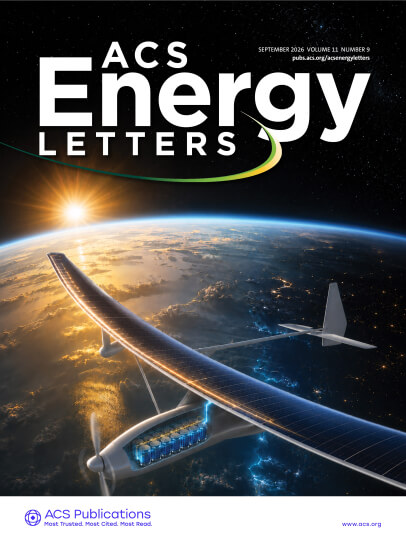
Harvard research on solar aircraft battery performance was featured on an ACS Energy Letters journal cover.
Solar-powered, fixed-wing, long-endurance aircraft are designed to cruise for weeks or months at a time through the stratosphere – twice the 30,000-foot cruising altitude of commercial jets, and higher than most clouds and weather. These aircraft must use excess solar energy during the day to continuously charge their batteries, then rely on those batteries at night.
Harvard researcher Craig Mascarenhas, who leads engineering research on solar aviation through the laboratory of Jim Anderson, the Philip S. Weld Professor of Atmospheric Chemistry at SEAS, spearheaded the study that establishes performance targets for next-generation solar aircraft batteries.
“It’s this circular mathematical relationship where you need more energy storage, but the batteries become heavier, so now you need more power to push it through the air to get more lift,” explained Mascarenhas, who is now an engineer focused on wireless power-transfer systems for NASA lunar missions but maintains a collaboration with Anderson’s lab.
High-resolution atmospheric data for many applications
Anderson, who has worked on solar aircraft concepts for the last three decades, heads the Harvard branch of a research collaboration called SACOS, or Stratospheric Airborne Climate Observing System, which has been funded by NASA and includes partners at MIT as well as private aerospace companies.
If optimized, solar stratospheric flight could provide persistent, detailed atmospheric and climate observations that are difficult and expensive to attain today. The NASA ER-2 high-altitude aircraft, for example, flies scientific missions carrying a pilot and instrumentation to collect data, but only for six to eight hours at a stretch, at tens of thousands of dollars per hour of flight time.
By contrast, a modern, unmanned solar aircraft could remain airborne for months, require fewer personnel and lower operating costs, and could be used to, for example, repeatedly monitor the same location for high-quality data. Potential value would range from new atmospheric chemistry to hurricane tracking to wildfire monitoring and prediction.
Energy density over power density
In their analysis, featured on the journal’s cover, the researchers identified 500 watt-hours per kilogram as an important threshold for the energy density of a solar stratospheric aircraft’s battery. At that level, they argue, persistent flight becomes viable across many parts of the world where atmospheric conditions allow.
By comparison, today’s commercial electric-vehicle batteries sit in the roughly 250 watt-hour per kilogram range, while experimental or specialty cells in the 400 watt-hour per kilogram range are already available. “We’re almost there,” Mascarenhas said. “Those cells are very expensive right now, but they’re getting cheaper very quickly.”
For this type of aircraft, the paper argues, energy density matters far more than power density, given that the aircraft’s power demands are exceedingly low, but the energy required to store enough energy to main flight remains high. Thus, battery developers should focus on prioritizing energy density, rather than optimizing both energy and power density equally, as is a more conventional principle of engineering. The study also drew on battery-science expertise from coauthors Venkatasubramanian Viswanathan and Shashank Sripad, whose work focuses on next-generation energy storage and electric aviation.
The paper is co-authored by John Langford, an aerospace entrepreneur whose companies have built and flown experimental solar aircraft, and with whom Anderson has had a long-term research collaboration.
Langford’s company Iris Aero is currently funded by a U.S. Department of Agriculture National Institute of Food and Agriculture grant, with the Harvard team serving as a research partner. Anderson and Mascarenhas are leading the research direction on the effort, which aims to support deep-learning and radiative transfer models for wildfire mapping and environmental sensing, enabled by stratospheric airborne observation as described in the recent ACS Energy Letters paper.
Mascarenhas said he is particularly motivated by the wildfire application. “I’m passionate about reducing the damage and destruction from wildfires across the world,” he said. “I think the capabilities that this project uniquely unlocks are very exciting.”
Topics: Climate, Environmental Science & Engineering, Industry, Research, Technology
Cutting-edge science delivered direct to your inbox.
Join the Harvard SEAS mailing list.
Scientist Profiles

James G. Anderson
Philip S. Weld Professor of Atmospheric Chemistry
Press Contact
Anne J. Manning | amanning@seas.harvard.edu