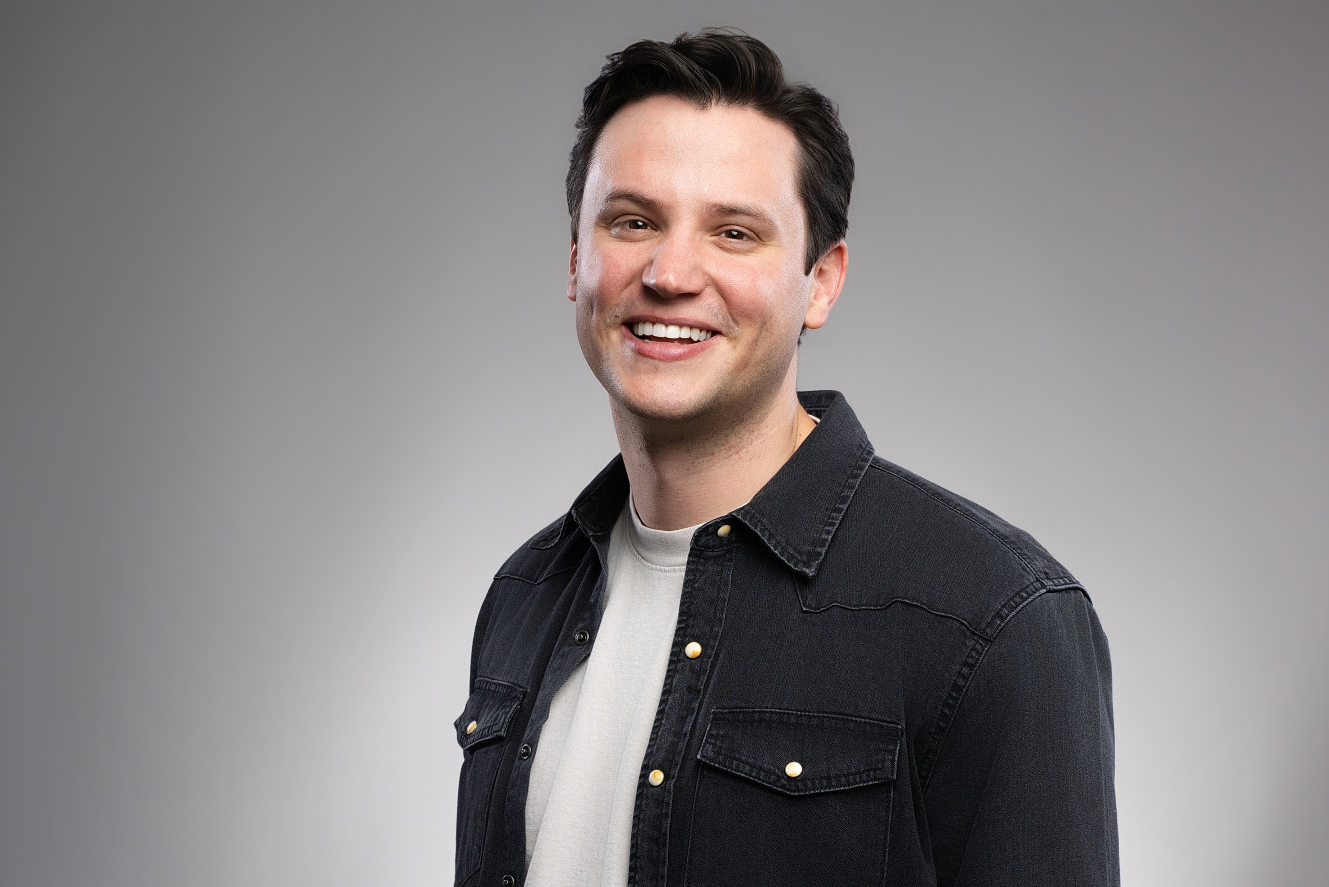
Bryce Strauss, MS/MBA '22 (Nominal)
Working at Lockheed Martin, Bryce Strauss got to work on the kinds of projects aerospace engineers dream of. Satellites that would orbit Jupiter, machines that could extract samples from near-earth asteroids, leadership strategies for commercial space flight – it was exactly what he wanted to do. But as he worked on those projects, he realized something: the software and hardware tools at his disposal, the critical infrastructure to design, test and analyze prototypes throughout the development process, were woefully insufficient to his team’s needs.
“While there, I became the internal tools person,” he said. “I ended up building a lot of software that we used internally to get our jobs done. My goal is to help engineers make really high confidence decisions and good judgment calls.”
Strauss wanted to turn that goal and knowledge into a company, and for that he needed an education in both engineering and business to compliment his bachelor’s degree in aerospace engineering from the University of Texas. That brought him to the MS/MBA in Engineering Sciences program run jointly by the Harvard John A. Paulson School of Engineering and Applied Sciences (SEAS) and Harvard Business School (HBS). While here, Strauss met Cameron McCord, a former submarine officer in the U.S. Navy who was pursuing an MBA. McCord introduced Strauss to Jason Hoch, McCord’s undergraduate roommate at Massachusetts Institute of Technology, and the trio began to brainstorm and lay the foundation for a business that could produce high-level data analysis tools for the defense and aerospace industries.
“Cameron and I used to joke that we were maybe the only people in our section that were obsessed with learning accounting,” said Strauss, MS/MBA '22. “We really used the HBS experience to elevate in so many ways how we think about building a big resilient business. And then I had the wonderful privilege of also being able to just dive in completely to SEAS and solve a lot of the technical gaps.”
The trio co-founded Nominal three months prior to Strauss graduating, then secured their first funding in the fall of 2022. The company has grown exponentially since then, and earlier this month announced a funding round of $80 million. The company is now valued above $1 billion, which is called a “unicorn” because of the rarity of billion-dollar companies. Nominal is the first unicorn founded by an MS/MBA student since the program welcomed its first class in 2018.
“It's one of those things where it's going exactly as we drew it up, and it's very motivating to be able to be really ambitious and take a big swing at all of this and feel really validated on things coming together really, really quickly,” said Strauss. “We want to build something generational. We want to build something that is meaningful for the world and meaningful for our employees.”
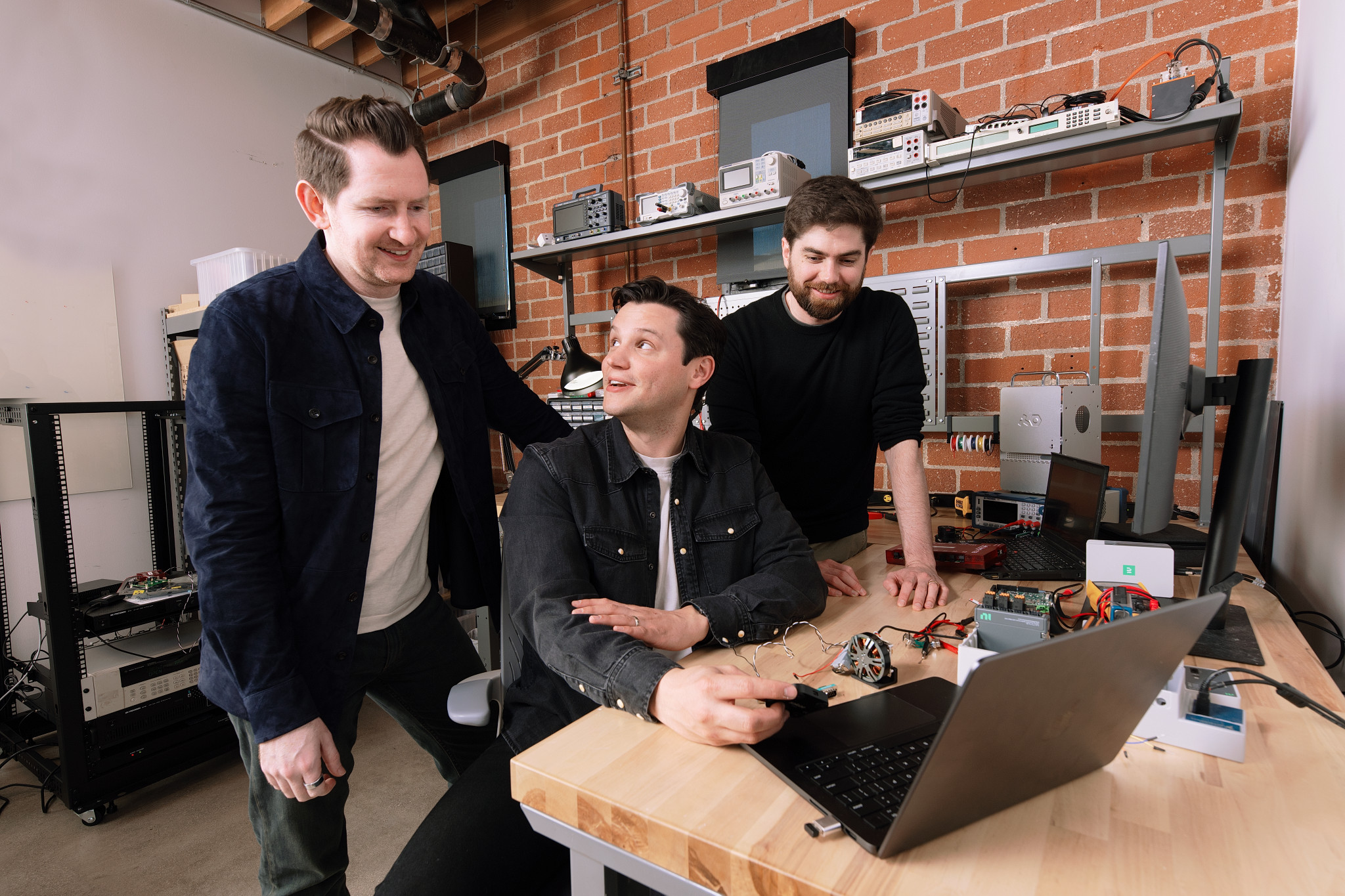
Bryce Strauss, MS/MBA '22, with Nominal co-founders Cameron McCord and Jason Hoch (Nominal)
Nominal is building software crucial to the next phase of industrial manufacturing by offering artificial intelligence-driven data platforms that enable high-level analysis throughout the design and testing process. Engineering projects undergo rigorous testing at every level from initial iterations to prototypes to deployment, and Nominal’s two platforms – Nominal Core and Nominal Connect – aim to make it easier for engineers to quickly gain high-level insights about what is or isn’t working with their projects.
“Engineers need better software, better hardware, better things in their lives to help them make judgment calls,” he said. “Any good piece of hardware is tested forward and backwards. We don't get on an airplane that someone just designed haphazardly. We get on an airplane that we know every single bolt on that thing has been thought through by multiple engineers and tested regularly.”
Initially focused on the aerospace and defense industries, where testing and data analysis is mission-critical, Nominal is already being used by over 80 companies, including four of the largest five defense contractors in the world.
“I've seen five first flights of aircraft, and a bunch of really cool critical technology for nuclear reactors,” he said. “You getting to be there and experience that alongside all of these ambitious hardware engineering teams is very fulfilling, and you realize your product is going to work. When you watch them do 10 times more in a week than they did three months prior, you feel those little seeds that you cannot wait to sprout and spread.”
SEAS and HBS proved to be the perfect spaces to develop Nominal. January mini-sessions on topics such as customer discovery taught lessons Strauss still uses, and the program’s Launch Lab taught the fundamentals of rapid prototyping that is critical to Nominal’s growth. Strauss also did research at the Edge Computing Lab at SEAS.
“I got to work with incredible professors like Vijay Reddi that were just seven steps ahead of the rest of the world,” Strauss said. “He’d think about how programs run on devices like Oura Rings or Apple Watches, and I realized it was the same challenge as a satellite. A satellite is a low size, weight and power machine, where you don’t have infinite power or infinite compute.”
Strauss plans to expand Nominal to new industries such as robotics, automotive manufacturing, and energy production – all fields that require resilient engineering of physical systems. But even as Nominal grows, Strauss has never forgotten the approach he learned in the MS/MBA program.
“It was incredibly consequential to our success, us being able to try and fail at stuff in a low-stakes, high-feedback and very inspiring place,” he said. “I’m very grateful for the curriculum, I'm very grateful for the professors, and I'm just super grateful for my classmates.”
Press Contact
Matt Goisman | mgoisman@g.harvard.edu