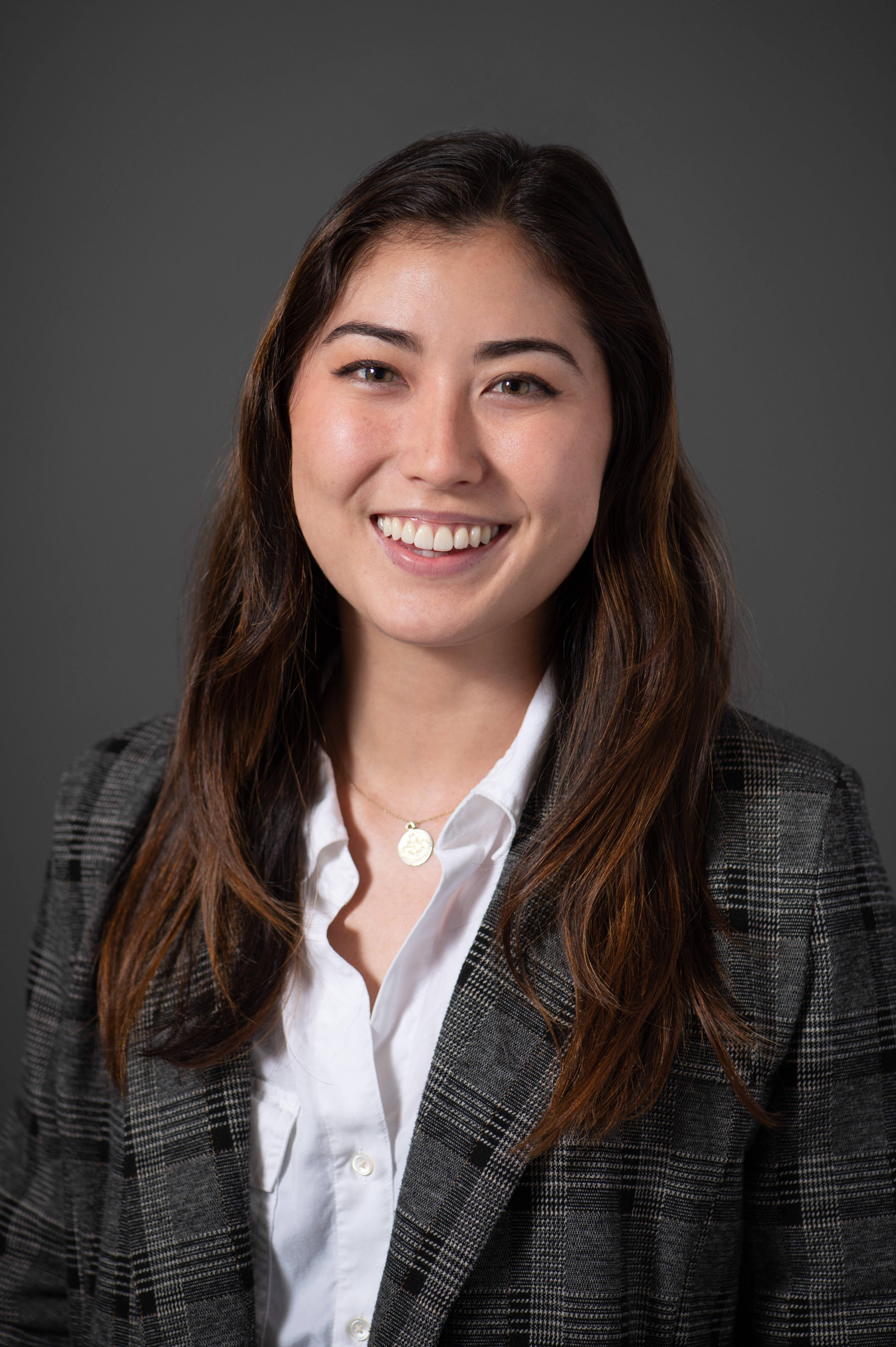
Nicole Nishizawa, S.B. '19
For Nicole Nishizawa, environmental sustainability is really an exercise in efficiency. If a data center needs water for cooling loads, the most sustainable distribution system is the one that wastes the least amount of water. The same can be said for wasted electricity in a city’s power grid, or corporate resources directed towards meeting sustainability goals. The more efficient a system, the more easily it can be implemented and sustained.
“Sustainability interests me as an optimization project, beyond my love for nature,” Nishizawa said. “It’s been an interesting challenge professionally and academically to push for initiatives that benefit both the planet and business, given limited natural resources, and often limited budgets.”
A former environmental science and engineering concentrator at the Harvard John A. Paulson School of Engineering and Applied Sciences (SEAS), Nishizawa has spent the last seven years helping companies optimize for sustainability. It began with helping design green building projects as a consultant with Atelier Ten in New York, and since March 2022 she’s worked at Sodali & Co, a global advisory firm in New York. Recently promoted to Director on the Sustainability team, Nishizawa helps companies develop and action corporate strategies for sustainability, ethics and stakeholder engagement, a set of practices grouped together under the term “Environmental, Social and Governance” (ESG).
“In my world, there are so many different sustainability data points and initiatives to manage, and it can become overwhelming,” she said. “What Harvard's really good at, in the classroom and out of the classroom, is teaching how to solve complex problems. As an advisor, one of my strengths is identifying what elements of a challenge matters most, supporting appropriate actions based on the challenge and client, and communicating that clearly to clients and their stakeholders.”
Born in Hawaii, Nishizawa came to Harvard as a softball recruit. She’d initially planned to study environmental engineering as a secondary, but that quickly morphed into her primary concentration.
“Growing up in Hawaii, there's a big emphasis on taking care of nature and taking care of the ʻāina, or earth,” she said. “That influenced my personal values and career path.”
Once she picked her concentration, Nishizawa augmented her coursework with lab experience. She joined the lab of Elsie Sunderland, Fred Kavli Professor of Environmental Chemistry and Professor of Earth and Planetary Sciences, which is where she first learned about per- and polyfluoroalkyl substances (PFAS), also known as “forever chemicals” because of how long they take to break down. She began by researching PFAS quantities in everyday products such as carpets and upholstery, then modeled PFAS exposure on campus. This led to a publication in Environmental Science and Technology Letters on PFAS measurement techniques in consumer products. Her senior capstone project was on potential PFAS exposure for toddlers, and she also worked as a research and communications intern for Harvard’s Office of Sustainability, where she developed standards for green products and cleaning practices.
“I was interested in it from a human health and environmental crossover perspective,” she said. “Sometimes getting people to care about sustainability is a challenge. When the sustainability conversation relates to human health, it can be more impactful, because that's something that people tangibly understand, relate to and care about.”
Researching PFAS taught Nishizawa, S.B. ‘19, about sustainability practices in both commercial products and building materials. She considered careers in either field as she approached graduation, ultimately choosing to focus on buildings and construction when she joined Atelier Ten.
“We’d get brought on by architects or developers to pursue green building certifications or support with sustainable design in general,” she said. “My work would include helping maybe six or seven different construction or design projects at a time, and getting into the nitty-gritty of the design of those buildings. For example, we would assess the embodied carbon of the different window facade options, and then make a recommendation to the architect on what makes the most sense from a sustainability perspective.”
Eventually, Nishizawa wanted to move up from consulting on individual buildings to large-scale corporate strategy. That brought her to Sodali & Co, where she helps companies develop and action ESG strategies and communicate effectively about their implementation.
“We'll have work streams on a specific ESG-related ratings assessment that we're helping them fill out, help put together a sustainability report that they do annually, or calculate their greenhouse gas emissions for the year,” she said. “One recent project that I worked on was helping this real estate company that had acquired another company with their data management approach and calculations. The data needed to understand energy, water and waste consumption across all of those properties came from many different sources.
We were figuring out data sources and systems that made the most sense for their program, and then also using that data and setup to go forward and calculate their annual energy, water, waste and emissions. The system that I helped build was a good foundation, and we were able to continue calculating their inventory in the following year.”
Seven years of developing sustainability strategies has shown Nishizawa that communication is essential to corporate implementation. Even if a new strategy would be better for both a company and the environment, it won’t happen unless that company’s decision-maker can be convinced to make a change.
“We are often helping our client contacts with messaging for their CEO, CFOs, or heads of Investor Relations, depending where sustainability fits in an organization,” she said.
Thanks in part to SEAS, Nishizawa knows she has the communication skills to turn those sustainability strategies into reality.
“Even from just dinner table conversations with peers, Harvard has been huge in developing and honing that communication skill for myself,” she said. “SEAS engineering classes, as one might imagine, did not have a lot of fluff. There’s a lot of instances where our work is valuable because we cut to what matters.”
Press Contact
Matt Goisman | mgoisman@g.harvard.edu