News
The large, complex molecules in our cells known as proteins are the workhorses of all life processes, but when they misfold or misbehave, disease can result. Detailed understanding of how protein changes affect health is considered a grand challenge of biology, but there’s currently no systematic way to induce many protein changes at once to study their effects.
Researchers led by Mo Khalil, the Hok Lam and Kathleen Kam Wong Professor of Bioengineering in the Harvard John A. Paulson School of Engineering and Applied Sciences (SEAS) and Professor of Molecular and Cellular Biology, want to change that.
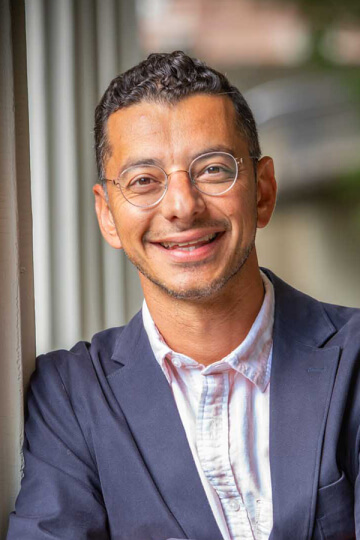
Supported by a National Institutes of Health Pioneer Award, Khalil and team will lead the development of a new biotechnology involving synthetic probes that can precisely alter individual protein activity. The technology should enable large-scale experiments similar to genetic screens, but focused on proteins, rather than genes.
The NIH Pioneer Award is part of the agency’s “High-Risk, High-Reward” funding program and supports scientists with outstanding records of creativity who are pursuing unique approaches to major challenges in biomedical and other sciences.
“Ultimately, our goal is to establish a blueprint for using functional continuous evolution systems to generate protein modulators for many classes of proteins,” Khalil said. “This will allow us to understand the landscape of how individual protein activities coordinate to produce cellular and disease states.”
He added: “This vision grew out of the collective ideas, expertise, and creativity of a remarkable team of researchers who came together in our lab around a shared scientific challenge. The award gives us the opportunity to pursue that vision together and tackle some truly grand challenges in biology.”
Leveraging his lab’s expertise in synthetic biology and continuous evolution, Khalil’s team is creating small, protein-based tools called nanobodies that bind to proteins and alter their activity. By being encoded into DNA, the nanobodies will allow scientists to make and test many different protein perturbations at once, enabling large-scale experiments equivalent to today’s CRISPR screens that activate or repress genes across a cell population. The nanobody screens should give researchers insight into how protein changes lead to different disease states, regardless of whether the related gene has been affected.
They will first apply their nanobodies to G-protein coupled receptors — cell-surface proteins that control many processes related to health and disease. Using their tools to allow millions of different receptor changes to be tested simultaneously, they hope to better understand how networks of these molecules control immune cell behavior in many disease processes including certain cancers. In the long term, this research could lead to new ways of treating many diseases.
Topics: Bioengineering, Health / Medicine, Meet Our Faculty, Research
Cutting-edge science delivered direct to your inbox.
Join the Harvard SEAS mailing list.
Scientist Profiles
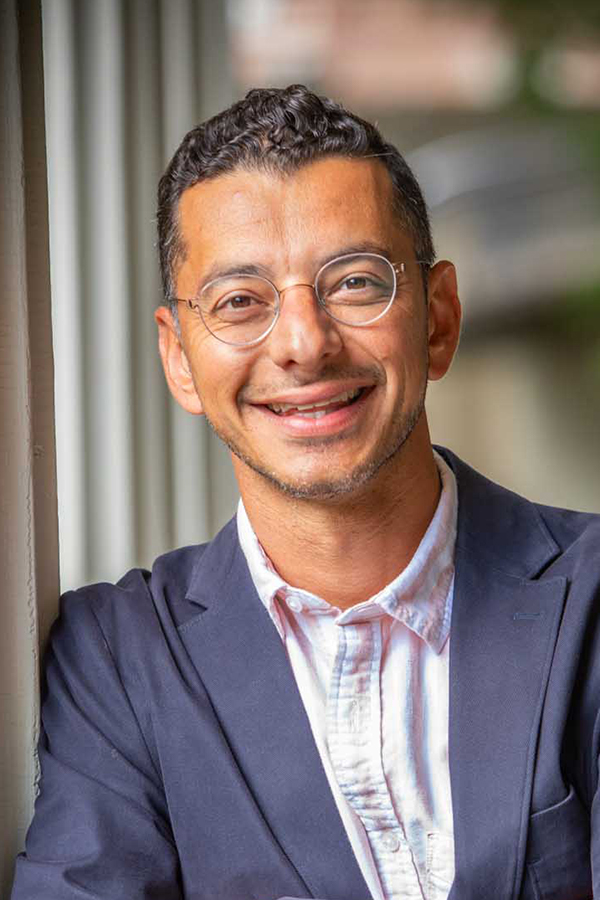
Ahmad (Mo) Khalil
Hok Lam and Kathleen Kam Wong Professor of Bioengineering and Professor of Molecular and Cellular Biology