News

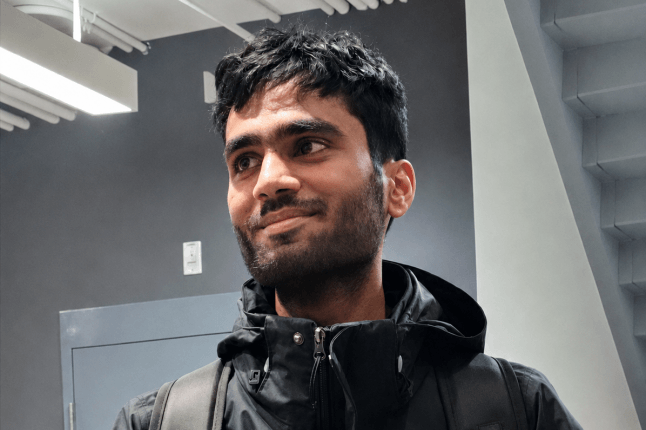
Shriya Srinivasan, Assistant Professor of Bioengineering (Eliza Grinnell/Harvard SEAS)
Shriya Srinivasan, Assistant Professor of Bioengineering at the Harvard John A. Paulson School of Engineering and Applied Sciences (SEAS), has been named a 2026 Sloan Research Fellow by the Alfred P. Sloan Foundation. She is one of seven Harvard-affiliated scholars selected in this year’s cohort.
The Sloan Research Fellowships recognize outstanding early-career researchers whose achievements and potential mark them as future leaders in their fields. Fellows receive a two-year, $75,000 award that can be used flexibly to support their research programs.
“I’m honored to receive this award and grateful to my mentors, students, and collaborators,” Srinivasan said.
Srinivasan joined the SEAS faculty in 2023, where she founded and directs the Harvard Biohybrid Organs and Neuroprosthetics (BIONICS) Lab. The lab’s interdisciplinary team studies how body-wide neural circuits communicate and control functions such as sensing and digestion. Srinivasan’s vision is to develop biohybrid technologies that can reprogram neural signaling to restore, and potentially expand, physiological function.
Earlier in her career, Srinivasan helped develop neural interface architectures for limb amputation that improved patients’ ability to control and feel their prosthetic limbs. Her current work extends this neuroprosthetic control framework to the nervous system inside the gut, known as the enteric nervous system, a largely unexplored sensorimotor network.
The Sloan Research Fellowship will support Srinivasan’s pioneering work in enteric neuromodulation, an emerging field focused on designing neural prosthetic systems that interact with the gut-brain axis. Her group is developing ingestible bioelectronic devices that access and stimulate neural pathways from within the gut. By combining these interfaces with adaptive control algorithms that monitor physiological state, the lab is working toward neuromodulation systems capable of dynamically regulating gut–brain signaling, an approach that could open new strategies for treating metabolic and gastrointestinal disorders.
Srinivasan earned her Ph.D. through the Harvard–MIT Program in Health Sciences and Technology and received her undergraduate degree in biomedical engineering from Case Western Reserve University. She was a Junior Fellow of the Harvard Society of Fellows. Her honors include the 2025 Gilbreth Lectureship from the National Academy of Engineering and the Lemelson–MIT Student Prize. She has also been recognized by Forbes and MIT Technology Review among the world’s leading young innovators.
Topics: Awards, Community, Bioengineering
Cutting-edge science delivered direct to your inbox.
Join the Harvard SEAS mailing list.
Scientist Profiles

Shriya Srinivasan
Assistant Professor of Bioengineering
Press Contact
Leah Burrows | 617-496-1351 | lburrows@seas.harvard.edu