News
Five computer science graduate students at the Harvard John A. Paulson School of Engineering and Applied Sciences (SEAS) have been named 2027 Siebel Scholars. Prashanth Amireddy, Tian (Sunny) Qin, Paula Rodriguez-Diaz, Itai Shapira and Kevin Zhang will each receive an award for their final year of graduate studies. They are among 72 students who join past Siebel Scholars classes to form an unmatched professional and personal network of more than 2,000 scholars, researchers, and entrepreneurs. Through the program, this formidable group brings together diverse perspectives from business, science, and engineering to influence the technologies, policies, and economic and social decisions that shape the future.
“Every year, the Siebel Scholars continue to impress me with their commitment to academics and influencing future society. This year’s class is exceptional, and once again represents the best and brightest minds from around the globe who are advancing innovations in healthcare, artificial intelligence, financial services, and more,” said Thomas M. Siebel, Chairman of the Siebel Scholars Foundation. “It is my distinct pleasure to welcome these students into this ever-growing, lifelong community, and I personally look forward to seeing their impact and contributions unfold.”
Founded in 2000 by the Thomas and Stacey Siebel Foundation, the Siebel Scholars program awards grants to 16 universities in the United States, China, France, Italy and Japan. Following a competitive review process by the deans of their respective schools on the basis of outstanding academic achievement and demonstrated leadership, the top graduate students from 27 partner programs are selected each year as Siebel Scholars and receive a $35,000 award for their final year of studies. On average, Siebel Scholars rank in the top five percent of their class, many within the top one percent.
Prashanth Amireddy is a Ph.D. student in the Theory of Computation group at Harvard University, where he is co-advised by Madhu Sudan, Gordon McKay Professor of Computer Science, and Salil Vadhan, Vicky Joseph Professor of Computer Science and Applied Mathematics. His research lies at the intersection of computational complexity theory, error-correcting codes, and pseudorandomness, with a particular focus on developing new algebraic techniques. His work addresses questions related to detecting and correcting errors over unstructured domains, as well as probabilistically checkable proofs, and seeks to deepen the connections between algebra and theoretical computer science.
Before beginning his doctoral studies, Amireddy was a Research Fellow at Microsoft Research India, where he worked with Ankit Garg and Neeraj Kayal on problems in algebraic complexity theory. He received his bachelor’s degree in computer science and engineering from the Indian Institute of Technology Madras, where he conducted research under the guidance of Professor Jayalal Sarma.
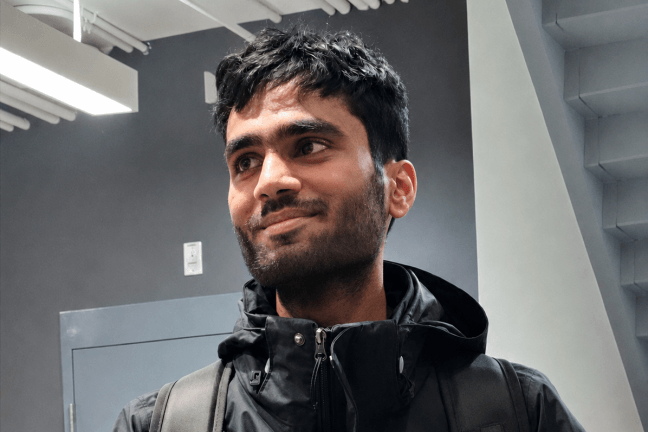
Prashanth Amireddy, Ph.D. student in computer science
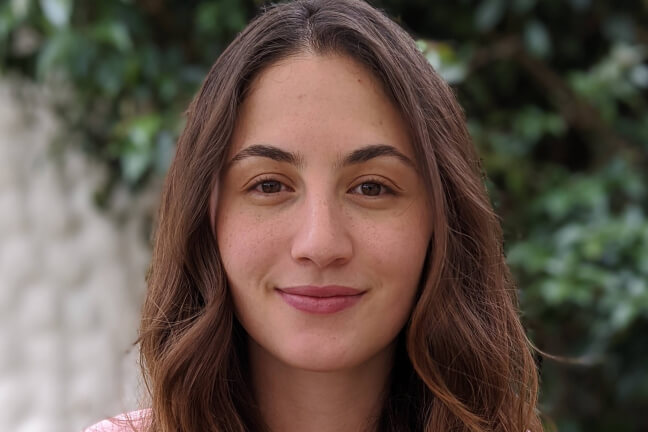
Paula Rodriguez-Diaz, Ph.D. candidate in computer science
Paula Rodriguez-Diaz is a Ph.D. candidate in computer science, advised by Milind Tambe, Gordon McKay Professor of Computer Science, and Elisabeth Paulson, Assistant Professor of Business Administration in the Technology and Operations Management Unit at Harvard Business School, in close collaboration with David Alvarez-Melis, Assistant Professor of Computer Science. Her research bridges data-centric machine learning with decision-focused learning to build systems that optimize the quality of downstream decisions in public-sector operations where data are scarce, constraints are binding, and distributions shift. She develops methods for task-aware data curation, efficient decision-focused training, and learning from observational data, with applications in maternal and child healthcare and refugee resettlement in collaboration with field partners including ARMMAN, Mbarara Regional Referral Hospital, and the Stanford Immigration Policy Lab. Her work has been published at venues including UAI, ICML, AAAI, and AAMAS. She co-founded the Centro de Analítica para Políticas Públicas (CAPP), bringing data science and AI to public-sector challenges in Latin America, and has served as poster co-chair for the EAAMO Conference and co-organizer of the Machine Learning for the Developing World Workshop at NeurIPS. Originally from Bogotá, Colombia, Paula earned a B.S. in mathematics and a B.S. and M.S. in industrial engineering from Universidad de Los Andes.
Itai Shapira is a Ph.D. candidate in computer science, advised by Professor Ariel D. Procaccia, Alfred and Rebecca Lin Professor of Computer Science. His research examines how to align AI systems with human values when the feedback used to train them is imperfect or reflects conflicting preferences. Drawing on machine learning and social choice theory, he studies how alignment methods transform human judgments and which behaviors they preserve or amplify. His recent work shows how reinforcement learning from human feedback can increase sycophancy, causing AI models to tell users what they want to hear, and develops methods for building AI systems that reflect a wide range of human views. Shapira is a 2025 JPMorgan Chase PhD Fellow and serves on the Student Leadership Council of the NSF AI Institute for Societal Decision Making. He holds a bachelor's degree in mathematics and economics from the Hebrew University of Jerusalem.
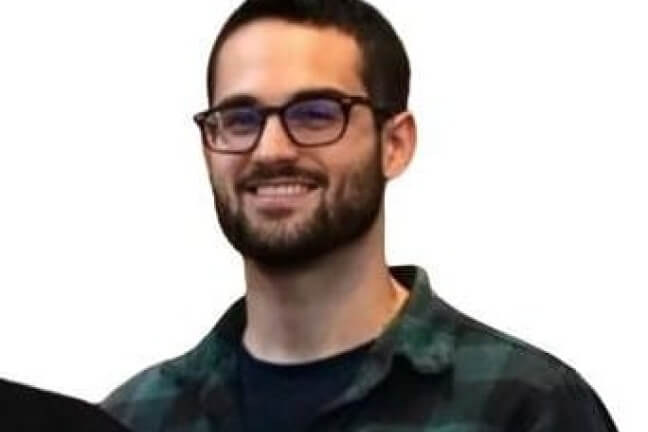
Itai Shapira, Ph.D. candidate in computer science
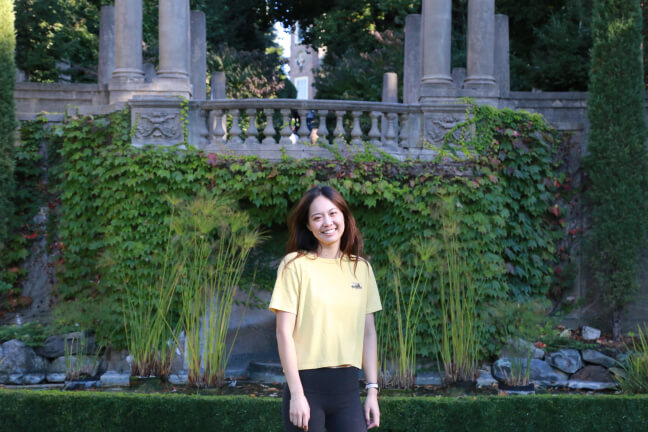
Tian (Sunny) Qin, Ph.D. student in computer science
Tian (Sunny) Qin is a fourth-year Ph.D. student in computer science, co-advised by Alvarez-Melis and Sham Kakade, Rampell Family Professor of Computer Science and Professor of Statistics. Her research aims to build a scientific understanding of how large AI models are trained, with a particular focus on data-centric AI and reinforcement learning. On the data-centric side, she studies how the data used to train models shapes their capabilities and behavior. On the reinforcement learning side, she studies how it can be used to improve the way models reason and solve problems. Across both directions, her goal is to develop a scientific understanding of model training choices in order to build better, more reliable models.
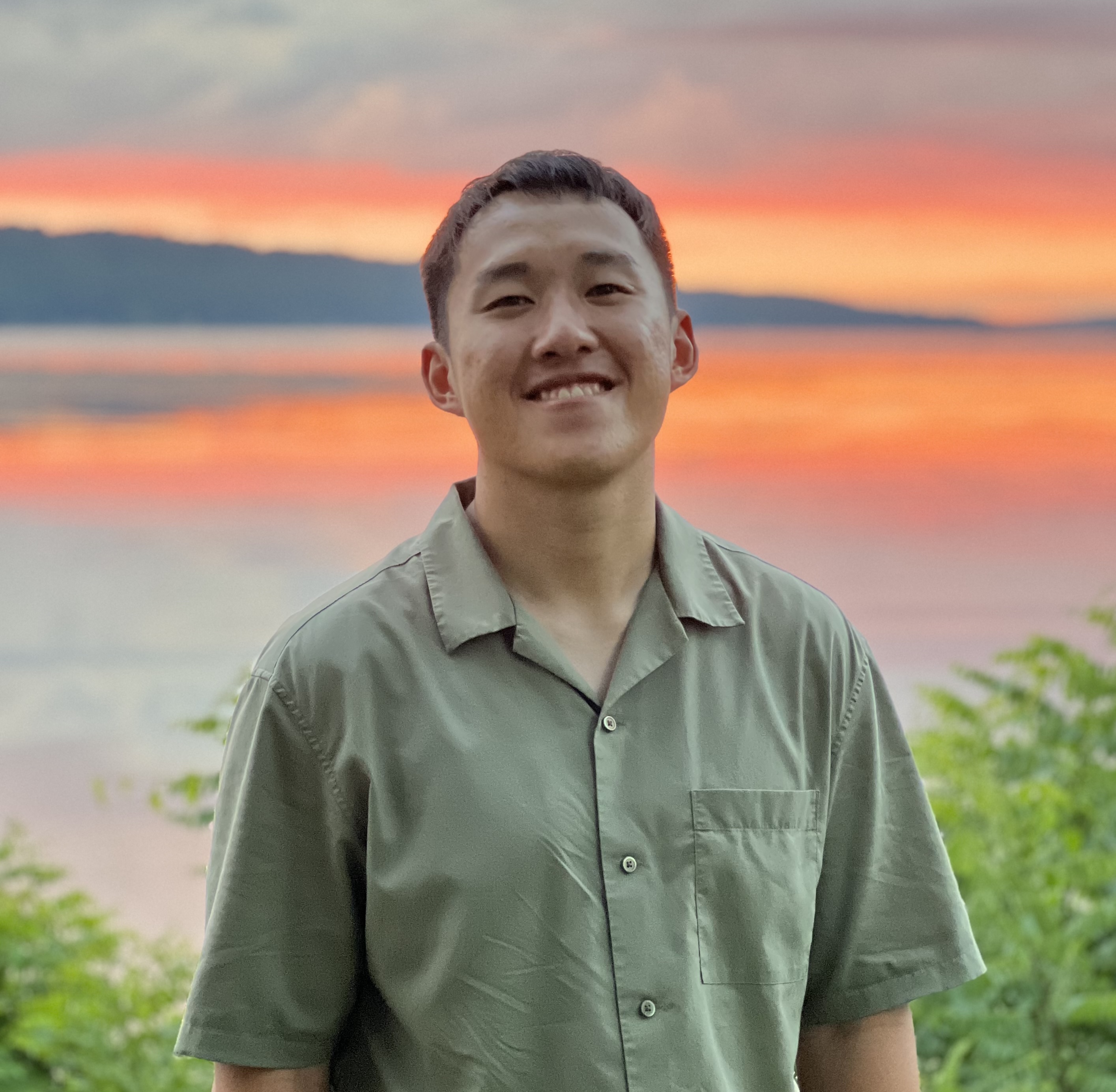
Kevin Zhang, Ph.D. candidate in computer science
Prior to her Ph.D., Sunny earned her B.A. cum laude in physics with a minor in statistics and machine learning at Princeton University. She then spent several years in quantitative trading before pivoting into AI research and joining Harvard's Ph.D. program.
Sunny is also passionate about mentoring others. She has served as a Teaching Fellow for “CS2881: AI Safety,” and she mentors students through independent research mentorship of master's and thesis students. She is currently organizing a workshop at NeurIPS 2026 on the interplay between pre- and post-training. Outside of research, she serves as Education Officer of the Harvard Mountaineering Club, where she regularly plans and leads climbing trips and expeditions, teaching and coaching students in climbing and mountaineering skills.
Kevin Zhang is a sixth-year Ph.D. candidate in computer science, advised by Stephen Chong, Gordon McKay Professor of Computer Science. His research focuses on developing whole program analyses for bug and vulnerability discovery. Specifically, his current work aims to make symbolic execution more scalable through the use of program dependence graphs. Through his work, he aims to advance practical tools that improve software security and reliability. He recently interned with the GraalVM team at Oracle Labs, where he worked on improving the precision of the points-to analysis used by GraalVM Native Image. Previously, he received a bachelor's degree in computer science from Cornell University.
Topics: Academics, Awards, Computer Science
Cutting-edge science delivered direct to your inbox.
Join the Harvard SEAS mailing list.