News
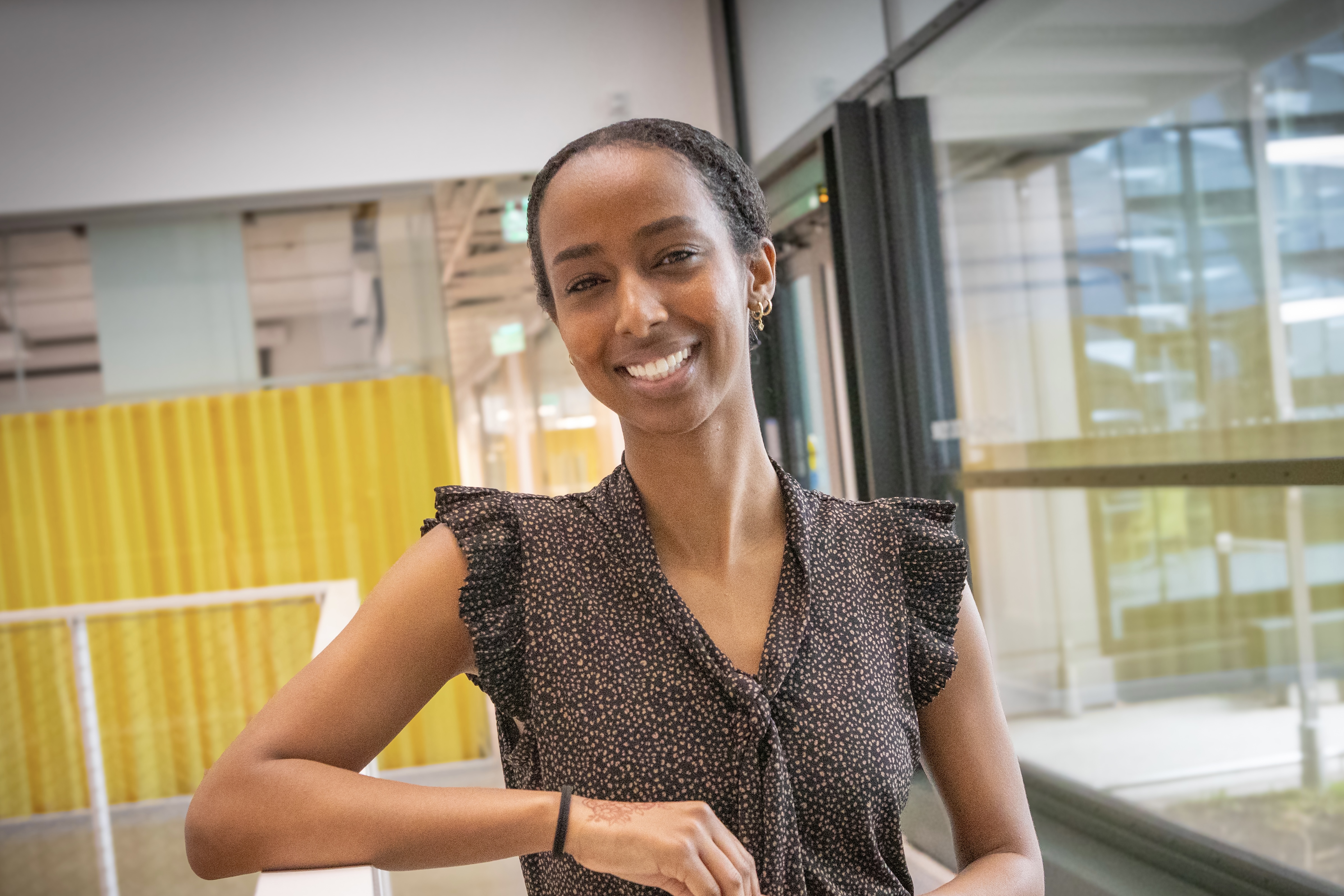
For senior capstone project, Saron Meressi developed a gene delivery system for the human heart (Eliza Grinnell/SEAS)
Engineering Design Projects (ES 100), the capstone course at the Harvard John A. Paulson School of Engineering and Applied Sciences (SEAS), challenges seniors to engineer a creative solution to a real-world problem.
A Tunable, Ventricle-Specific Gene Delivery System
Saron Meressi, S.B. ‘26, Bioengineering
Advisor: Yi Wang, William Pu
• Please give a brief summary of your project.
My project focused on optimizing cardiac gene delivery using adeno-associated virus (AAV) technology. Specifically, I designed a tunable, ventricle-specific gene delivery system that enables more precise targeting within the heart.
• What real-world challenge does your project address?
There is currently a lack of robust gene delivery platforms capable of targeting the ventricles with high specificity.
• How did you come up with this idea for your final project?
The human heart is four-chambered, with two chamber types: atrial and ventricular. Gene delivery presents a powerful tool not only for restoring deficient gene function in conditions that affect the ventricles (e.g. ventricular fibrillation), but also for modeling these diseases. This allows researchers to better understand the underlying pathophysiology and to develop and test targeted, chamber-specific therapies. I was particularly interested in adding a layer of tunability, enabling more precise control over where and how genes are expressed within the heart.
• What was the timeline of your project?
A significant portion of the project was dedicated to the design, build, and iteration phases. Over several months, I repeatedly refined my constructs based on experimental outcomes, with iteration playing a central role in improving performance in-vivo.
• What part of the project proved the most challenging?
Designing a system that accounted for multiple possible outcomes was the most challenging aspect. Additionally, evaluating the effectiveness of my designs required in vivo validation (mouse models), which is inherently time-intensive. This made it especially important to carefully plan and optimize each iteration before testing.
• What part of the project did you enjoy the most?
I enjoyed connecting my design choices to the in vivo outcomes. Interpreting fluorescence readouts and linking expression patterns back to specific design elements was particularly rewarding, as it validated the underlying engineering approach.
• What did you learn, or skills did you gain, through this project?
Beyond technical skills, I developed a strong foundation in experimental design and iterative problem-solving. Managing a largely independent, long-term project also strengthened my ability to troubleshoot, adapt, and think critically about how to refine my experimental approach.
Topics: Academics, Bioengineering, Health / Medicine
Cutting-edge science delivered direct to your inbox.
Join the Harvard SEAS mailing list.
Press Contact
Matt Goisman | mgoisman@g.harvard.edu