News
Project CETI (Cetacean Translation Initiative) announced this week the publication of two landmark scientific studies presenting the most comprehensive documentation of a sperm whale birth ever recorded and the first quantitative evidence of cooperative birth assistance among non-primates.
Published in Science and Nature’s Scientific Reports, the studies analyze over six hours of underwater audio and aerial drone footage captured on July 8, 2023, in the waters off Dominica where researchers have been studying the lives of sperm whale families for over two decades.
The Project CETI team includes researchers from the Harvard John A. Paulson School of Engineering and Applied Sciences (SEAS). Harvard co-authors on the Scientific Reports study are Robert J. Wood, the Harry Lewis and Marlyn McGrath Professor of Engineering and Applied Sciences; Stephanie Gil, the John L. Loeb Associate Professor of Engineering and Applied Sciences; Daniel Vogt, lead Harvard SEAS engineer for Project CETI; electrical engineer Michael Salino-Hugg; former postdoctoral researcher Alyssa Hernandez; and postdoctoral researcher Sushmita Bhattacharya.
The research documents an entire sperm whale unit — both related and unrelated females from two matrilines of grandmothers, mothers, sisters, and daughters — working together to support the labor, birth and early moments of a newborn calf. Researchers observed coordinated lifting, physical support, and caregiving behaviors rarely witnessed in marine mammals and never before recorded in such detail.
Observations of wild cetacean births are rare and have been recorded in less than 10% of species, making this documentation exceptionally rare. The Science paper, “Cooperation by non-kin during birth underpins sperm whale social complexity,” uses high-resolution drone footage, computer vision, multiscale network analysis, and a newly developed software tool created specifically for this analysis, paired with long-term data of this well-studied social unit, to quantify coordinated caregiving behaviors. The findings show that female sperm whales from two unrelated matrilines come together during a birth to assist the laboring mother, and both kin and non-kin taking turns assisting the newborn. This provides the first quantitative evidence of birth attendance outside of humans and a few other primates.
Nature’s Scientific Reports paper, “Description of a collaborative sperm whale birth and shifts in coda vocal styles during key events,” presents a moment-by-moment account of the birth, contextualized within what is known about whale behavior, communication, and evolution.
Audio data revealed distinct shifts in vocal styles during key moments of the birth, including the presence of vowel-like structures, adding a new dimension to Project CETI’s ongoing work decoding sperm whale communication.
Together, the studies suggest that cooperative caregiving during birth is an ancient evolutionary behavior. Phylogenetic analysis indicates that collective lifting of newborn whales may predate the most recent common ancestor of toothed whales more than 36 million years ago. The behaviors documented here suggest that cooperation during births functions to reinforce social bonds between sperm whales, which underpin their large-scale society. Helping unrelated companions drives them to help in return later. In this way, a foundation of trust and collective success builds their social world.
“These findings fundamentally reshape how we understand whale society,” said David Gruber, National Geographic Explorer, Founder and President of Project CETI, Distinguished Professor of Biology at the City University of New York former Radcliffe Fellow. “What we’re seeing is deeply coordinated social care during one of the most vulnerable moments of life.”
Regarding the uniqueness of this study, Diana Reiss, Professor in the Animal Behavior and Conservation Program in the Department of Psychology at Hunter College, CUNY, shared: “This work speaks to the fact that longitudinal studies are critical. When you're as familiar with the individual animals, like the CETI team is with this unit of whales, the trust these whales have with their team is unique. I'm not sure this unit would tolerate observers being so close in any other instance.”
The research was made possible by decades of ongoing fieldwork led by Shane Gero, National Geographic Explorer, Biology Lead for Project CETI and founder of The Dominica Sperm Whale Project. The mother giving birth — known to researchers since 2005 as Rounder from Unit A — was observed alongside both her mother, Lady Oracle, and her daughter, Accra, marking the presence of three generations of females participating in the event.
“This is the most detailed window we’ve ever had into one of the most important moments in a whale’s life,” said Shane Gero, also a Scientist in Residence at Carleton University. “Because this family unit has been studied for decades, we could see what the grandmother was doing, how the new big sister acted, and how each helped mom and newborn, placing this rare birth within a deep social and behavioral context.”
Members of the Project CETI machine learning, engineering, and biology teams were present on the research vessel during the birth, contributing firsthand observations alongside advanced technological analysis.
These findings place the complexity of sperm whale birth behavior and coordination incomparative context with terrestrial mammals, including humans. They also raise important questions about the communication and cognitive complexity that are needed for these behaviors. This builds on CETI’s recent findings about the complexity of sperm whale communication such as a phonetic alphabet and vowel and diphthong-like spectral patterns in sperm whale codas.
Topics: AI / Machine Learning, Electrical & Computer Engineering, Materials Science & Mechanical Engineering, Research, Robotics, Technology
Cutting-edge science delivered direct to your inbox.
Join the Harvard SEAS mailing list.
Scientist Profiles
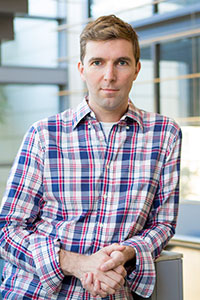
Robert J. Wood
Harry Lewis and Marlyn McGrath Professor of Engineering and Applied Sciences
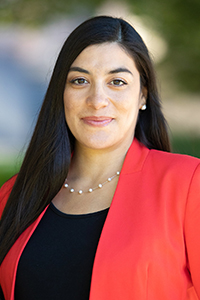
Stephanie Gil
John L. Loeb Associate Professor of Engineering and Applied Sciences
Press Contact
Anne J. Manning | amanning@seas.harvard.edu
Related News

Applying AI to Accelerate Design, Test and Manufacture
University of Washington Mechanical Engineering
AI / Machine Learning, Applied Physics, Computer Science, Electrical & Computer Engineering, Materials Science & Mechanical Engineering, Meet Our Faculty, Research, Technology
