News
A high-energy showcase of engineering talent and innovation took over the Science and Engineering Complex last week at the 2026 Design & Project Fair, where students in the Harvard John A. Paulson School of Engineering and Applied Sciences (SEAS) presented final projects from various courses.
The East atrium brimmed with projects from “ES 50: Introduction to Electrical Engineering,” a colorful showcase of creativity and ingenuity in which students delve into the science of electrical systems that power our world and our everyday gadgets. Projects on display included an electrical piñata, animatronic talking heads, interactive art, and a pitch-perfecting karaoke machine.
In the West atrium, graduating seniors presented their final posters for ES100, the year-long capstone course in which students deliver engineered solutions for real-world problems. Onlookers browsed posters exploring cancer treatments, axolotl brains, marine robots, mitochondrial physiology, and more. A handful of students were honored with Dean’s Awards for Outstanding Engineering Projects.
Activity from the SEC’s lower atrium could be heard throughout the building as the ever-popular Turf Wars, the final project for “ES51: Computer-Aided Machine Design,” held sway into the early afternoon. Teams of students built small, wheeled robots that could grasp, transport, and drop small objects on a game board, pitted against each other in a double-elimination tournament. In the end, team Jack in the Bot prevailed.
Photo highlights from the Design & Project Fair:
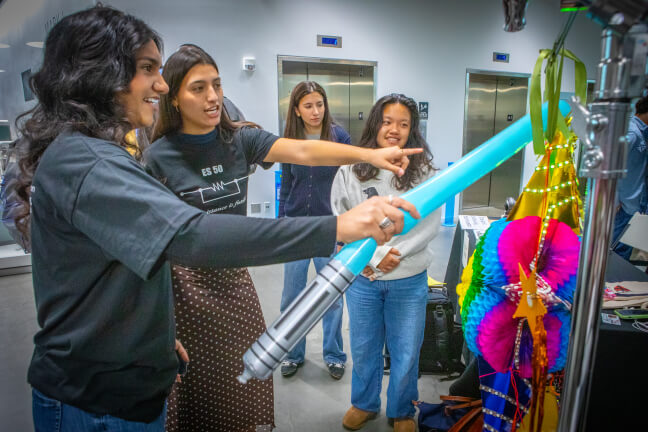
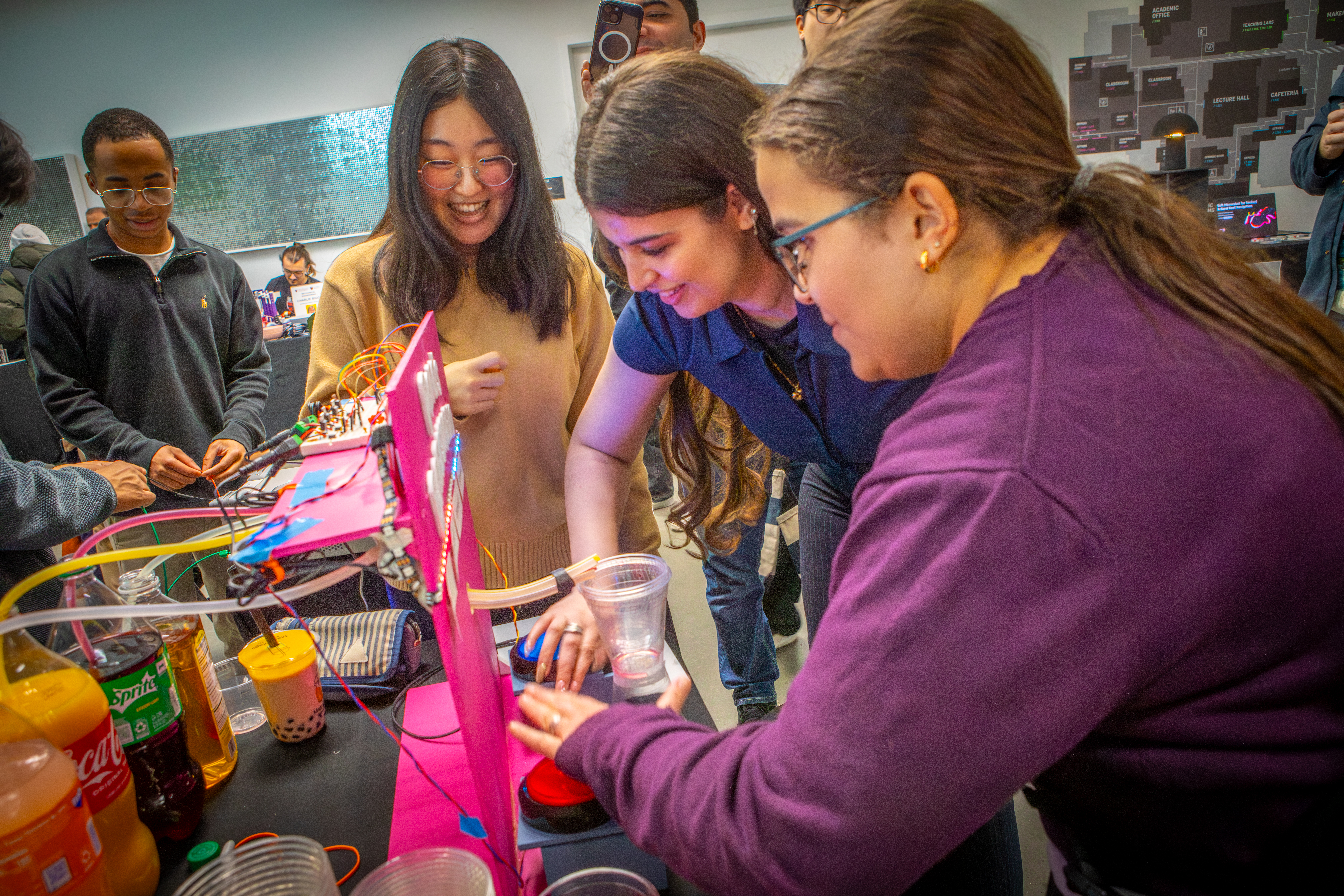
For their ES50 final project, Andrea Gonzalez Trujillo, Sofia Zheng, Nikki Piovan, and Alejandra Fernandez created an electrical piñata, an interactive memory game that challenges players to repeat randomized LED patterns. After three correct sequences, a servo mechanism releases candy, bringing together sensors, circuitry, and mechanical design in a playful, arcade-style experience. The project pushed the team to integrate multiple components into a single working system, highlighting both the complexity and creativity of electrical engineering. (Eliza Grinnell/Harvard SEAS)
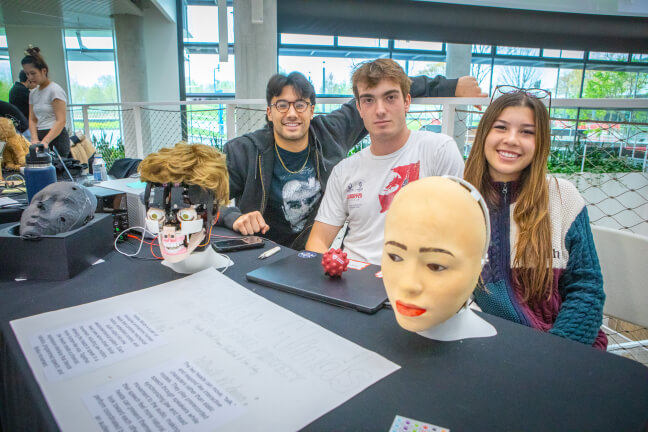
For their final ES50 project, Hayley Block, Henry Tavistock and Evan Croley created “Hollow Minds,” a pair of animatronic heads designed to mimic human facial movement with an uncanny level of realism. Powered by servos, embedded audio, and wireless controls, the heads can speak, blink, and emote, blending mechanical engineering, coding, and silicone casting into a lifelike (and slightly eerie) demonstration. The project explores how digital intelligence and physical systems can come together to replicate human expression. (Eliza Grinnell/Harvard SEAS)
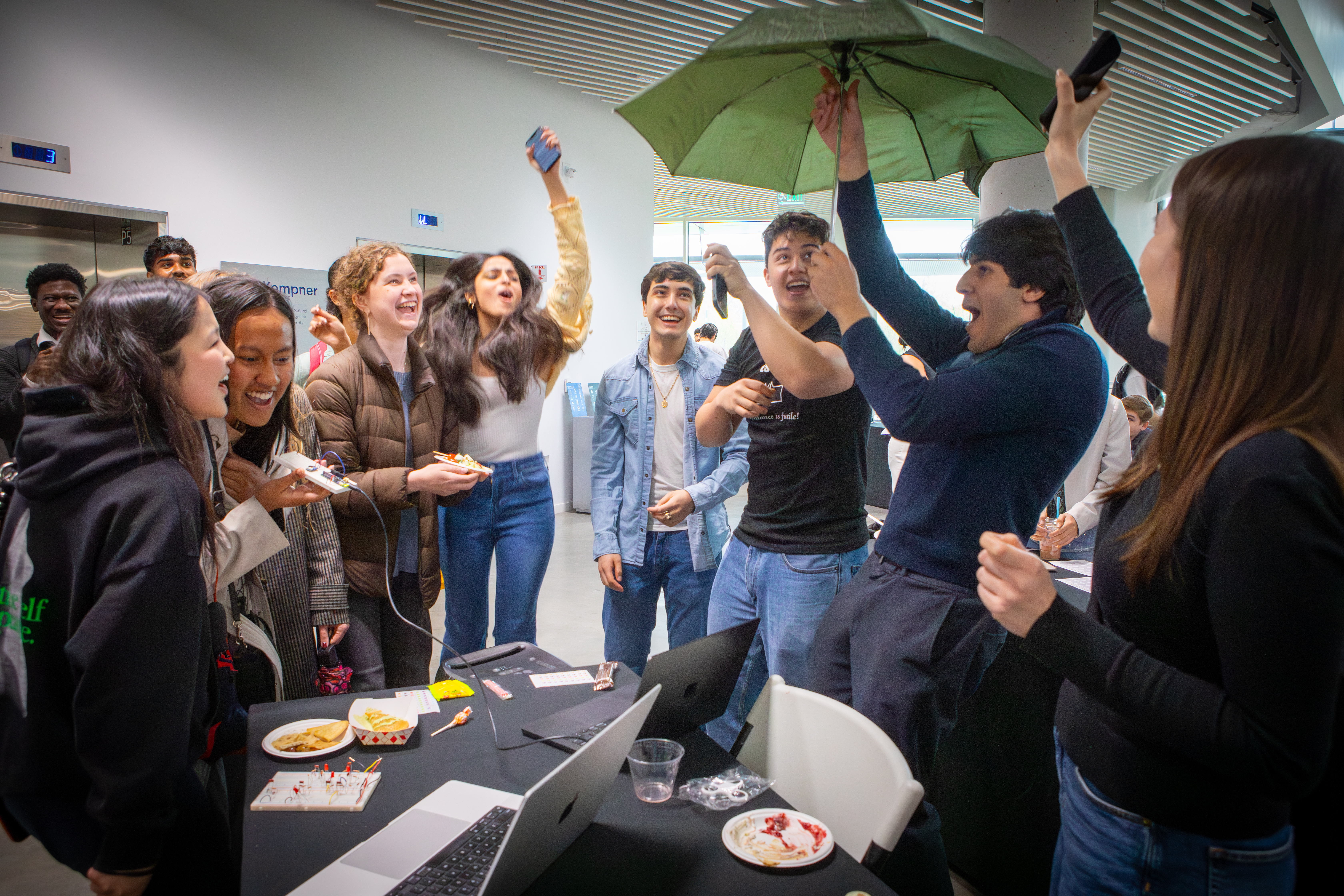
Students sing karaoke to Rihanna’s “Umbrella” with help from the “Pitch Perfect” device, developed by Jose Delgado Guillen, Van Villanueva, Eliza Wapperom and Ali Sediqe. (Eliza Grinnell/Harvard SEAS)
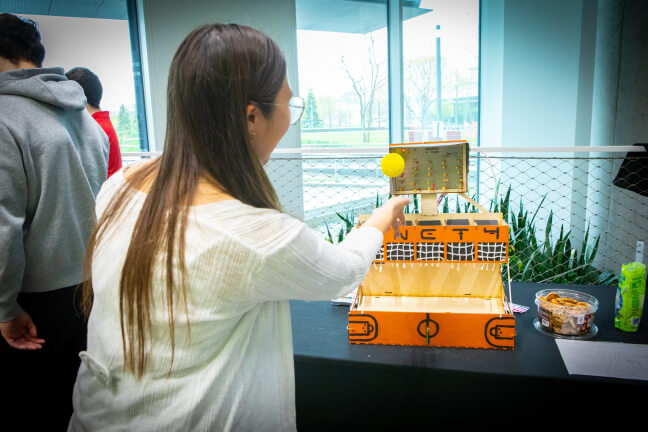
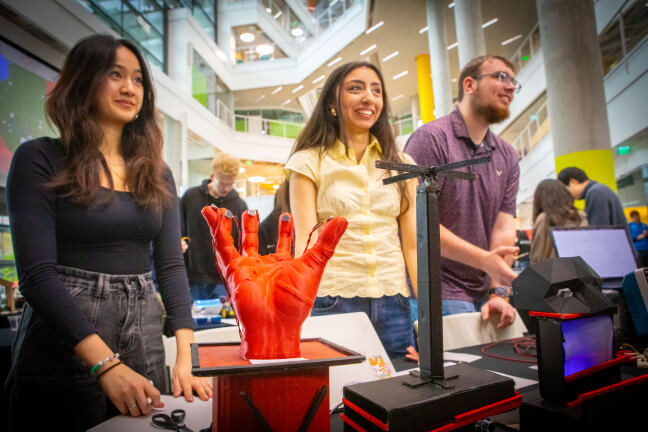
Ana Reveles Leon, a mechanical engineering concentrator, and Karis Ka, an electrical and computer engineering and art, film, and visual studies concentrator, created the interactive installation "Haptic Hardware" that explores motion, distance, and the human senses. Using sensors, vibration, sound, and responsive light, the piece invites viewers to engage through touch, sight, and hearing. (Eliza Grinnell/Harvard SEAS)
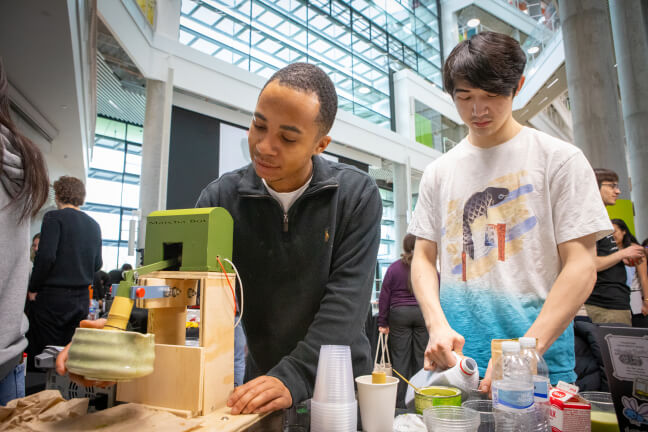
"Macha Bot," by Josh Zyzak, Juan Morales and Davu Smith.
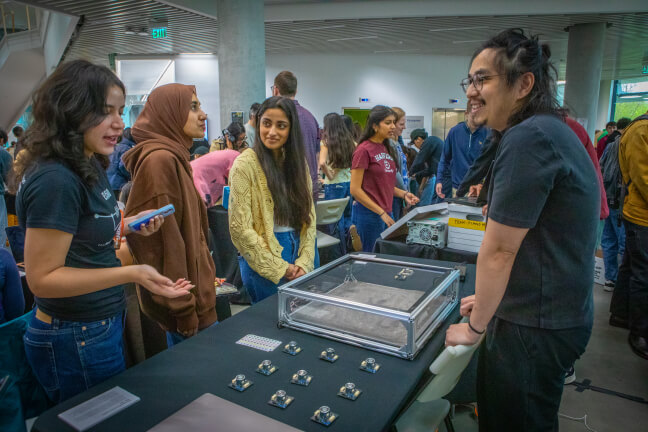
"Drawing Waves," by Jake Tan (Eliza Grinnell/Harvard SEAS)

Students received a visit from Sasha, Harvard University Police Department's Community Engagement Dog. (Eliza Grinnell/Harvard SEAS)
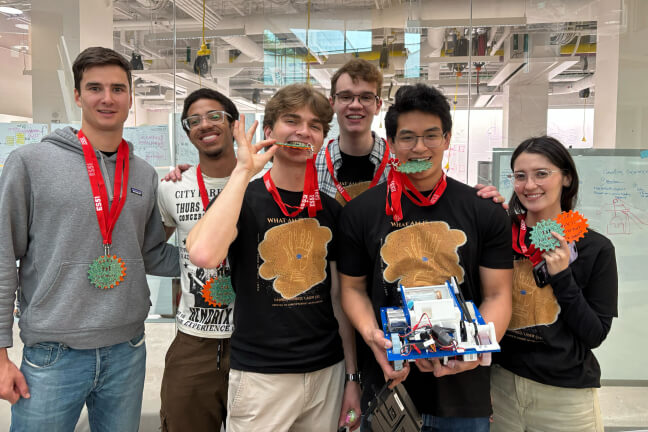
Turf Wars winning team Jack in the Bot included Gabriela Franco, Alex Horton IV, Ian Kowalcyk, Daniel Panganiban and Charlie Rahdon.
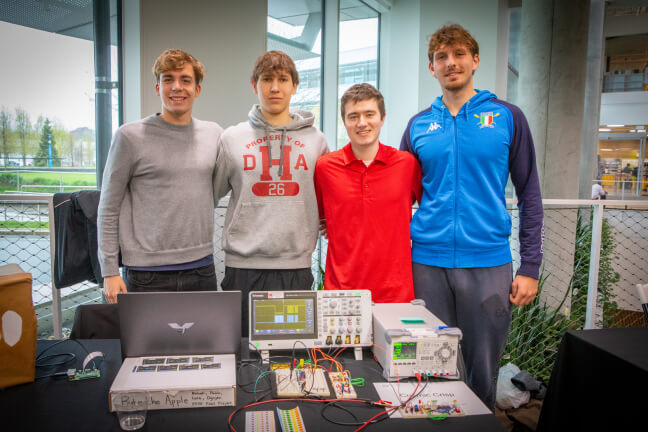
"Cosmic Crisp," by Michael Maines, Pablo Martinez Palop, Luca Vicino and Ognjen Pilipovic. (Eliza Grinnell/Harvard SEAS)
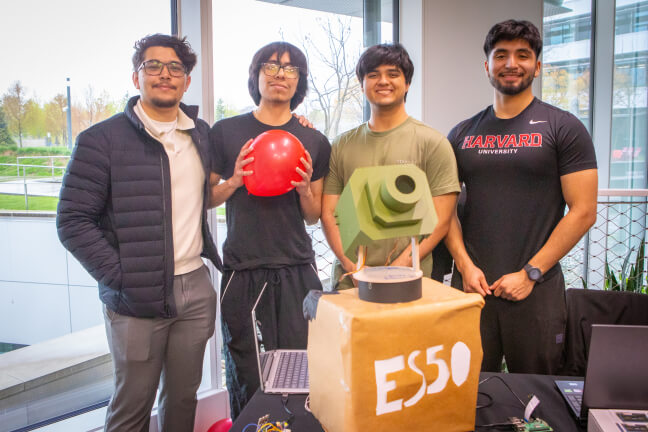
Raul Guerra and teammates Miguel Chora, Jonathan Manzo and Paul Perez created “BANANA,” an interactive turret system inspired by a popular mobile game, designed to track and “target” moving balloons. Using a Raspberry Pi, Arduino, camera vision, and ultrasonic sensors, the system detects motion in real time and triggers a response when a user’s hand reaches a set distance. (Eliza Grinnell/Harvard SEAS)
Cutting-edge science delivered direct to your inbox.
Join the Harvard SEAS mailing list.