News
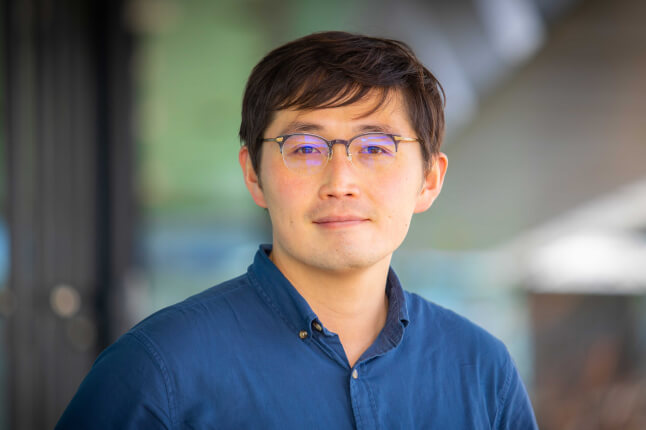
Maxim Prigozhin, Assistant Professor of Molecular and Cellular Biology and of Applied Physics at the Harvard John A. Paulson School of Engineering and Applied Sciences (SEAS), has been named one of eight recipients of the 2026 MIND Prize from the Pershing Square Foundation.
The MIND Prize — which stands for Maximizing Innovation in Neuroscience Discovery — supports high‑risk research that aims to understand neurodegenerative diseases such as Alzheimer’s and dementia. Each 2026 prize winner will receive $750,000, distributed as $250,000 per year over three years. The Foundation established the prize to “change the paradigm of neuroscience research” by empowering scientists to rethink conventional approaches and develop tools that will revolutionize the ability to predict, prevent, and treat neurodegeneration.
The Prize will support Prigozhin’s research state-of-the-art imaging technology that could transform how scientists study Alzheimer’s disease.
Prigozhin writes in the description of his project:
“Scientists studying brain diseases like Alzheimer's face a frustrating problem: current microscopes force them to choose between seeing the tiny structures inside brain cells or identifying specific disease-related proteins, but not both at the same time—it's like having to choose between a high-resolution vision that can't distinguish colors, or a color vision with blurry images. Our team is developing a revolutionary microscopy technique that solves this problem by creating special molecular tags that glow when hit by an electron beam, allowing us to simultaneously capture incredibly detailed images of brain structures while pinpointing the exact locations of disease-causing proteins. Using this new method, we will study brain tissue from mice with Alzheimer's-like disease, creating the first-ever 3D color map showing where toxic proteins build up within the brain—like having Google Street View for the brain. This technology could transform how researchers study brain diseases, potentially accelerating the development of new treatments by revealing exactly what goes wrong inside diseased brains at a level of detail never before possible.”
Prigozhin joined SEAS faculty in 2020. He received his HBSc in Chemistry and Physics from the University of Toronto and PhD at the University of Illinois at Urbana-Champaign, where he studied the biophysics of protein folding using ultrafast lasers and molecular dynamics simulations.
Topics: Applied Physics, Awards, Bioengineering
Cutting-edge science delivered direct to your inbox.
Join the Harvard SEAS mailing list.
Scientist Profiles

Maxim Prigozhin
Assistant Professor of Molecular and Cellular Biology and of Applied Physics
Press Contact
Leah Burrows | 617-496-1351 | lburrows@seas.harvard.edu