News
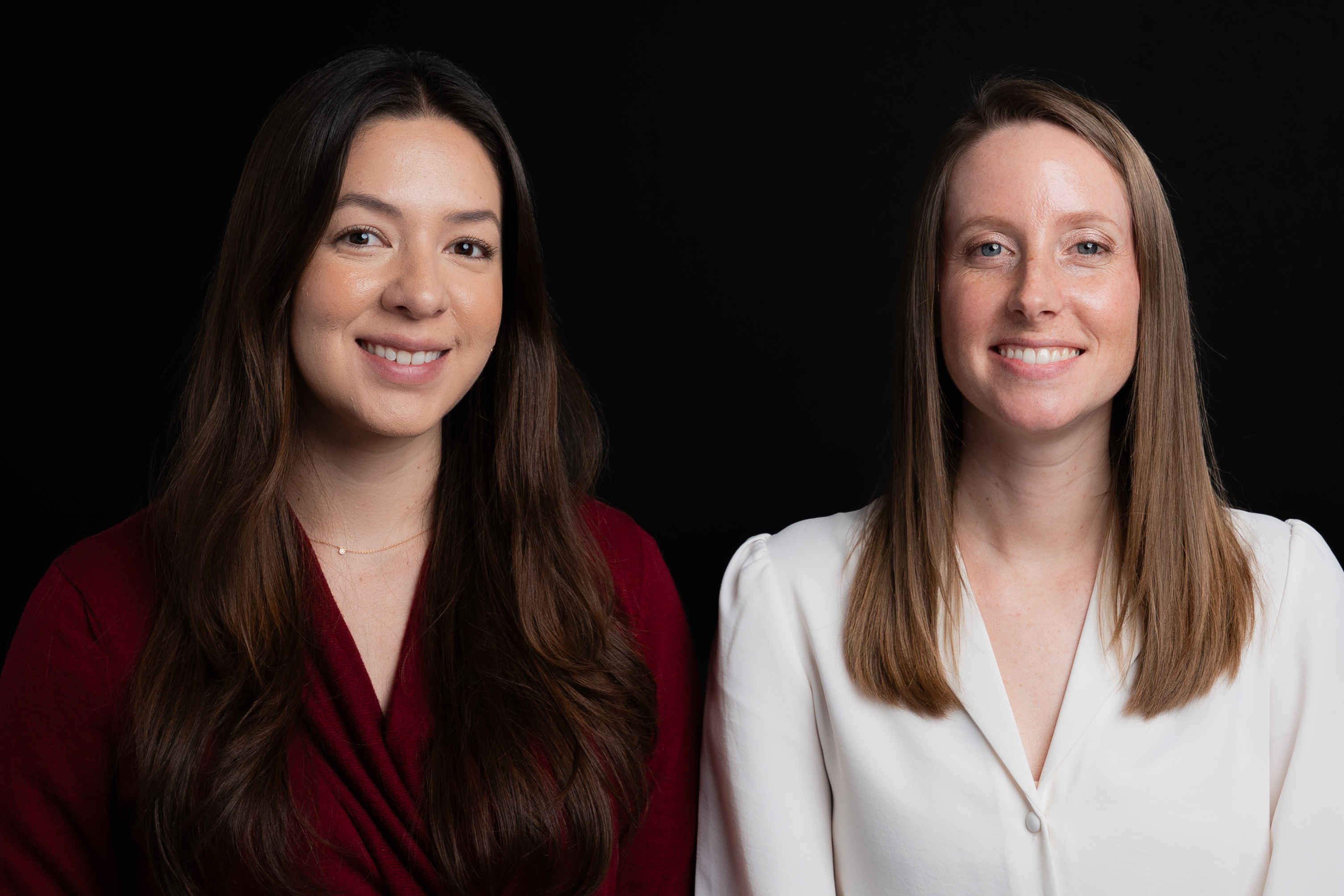
Lyv Health co-founders Andrea Corleto and Jennifer Arnold (Sam Mironko/Harvard Innovation Labs)
Three start-ups co-founded by students at the Harvard John A. Paulson School of Engineering and Applied Sciences (SEAS) have been named finalists for the 2026 Harvard President’s Innovation Challenge organized by the Harvard Innovation Labs. The three teams will compete for shares of more than $500,00 in start-up funding at the challenge’s awards ceremony on May 6 at Harvard Business School’s Klarman Hall.
“We are so excited,” said MS/MBA student Jennifer Arnold, whose start-up Lyv Health is among the finalists. “There are many strong healthcare startups building alongside us at the Harvard iLab. We really respect the work our peers are doing, so it feels very meaningful to be selected as a finalist among that group.”
Competing in the Student Health Care & Life Sciences track, Lyv Health aims to connect the worlds of wellness and licensed medical testing. Wellness centers and spas often lack access to medical professionals that can provide services such as blood testing or prescriptions for medicine, and Lyv Health’s platform connects those centers and professionals so the services can be provided safely and compliantly. Launching within the last two months, the start-up already has 50 businesses on the platform.
“We are building the infrastructure platform to connect clinical care with wellness environments, with the goal of helping people access more proactive solutions,” Arnold said. “I spent a decade helping bring products to market that were incredibly effective, but they were often used once patients were already quite sick. I kept coming back to the same question: why are we waiting until that point to intervene? That led us into exploring longevity and more proactive models of care.”
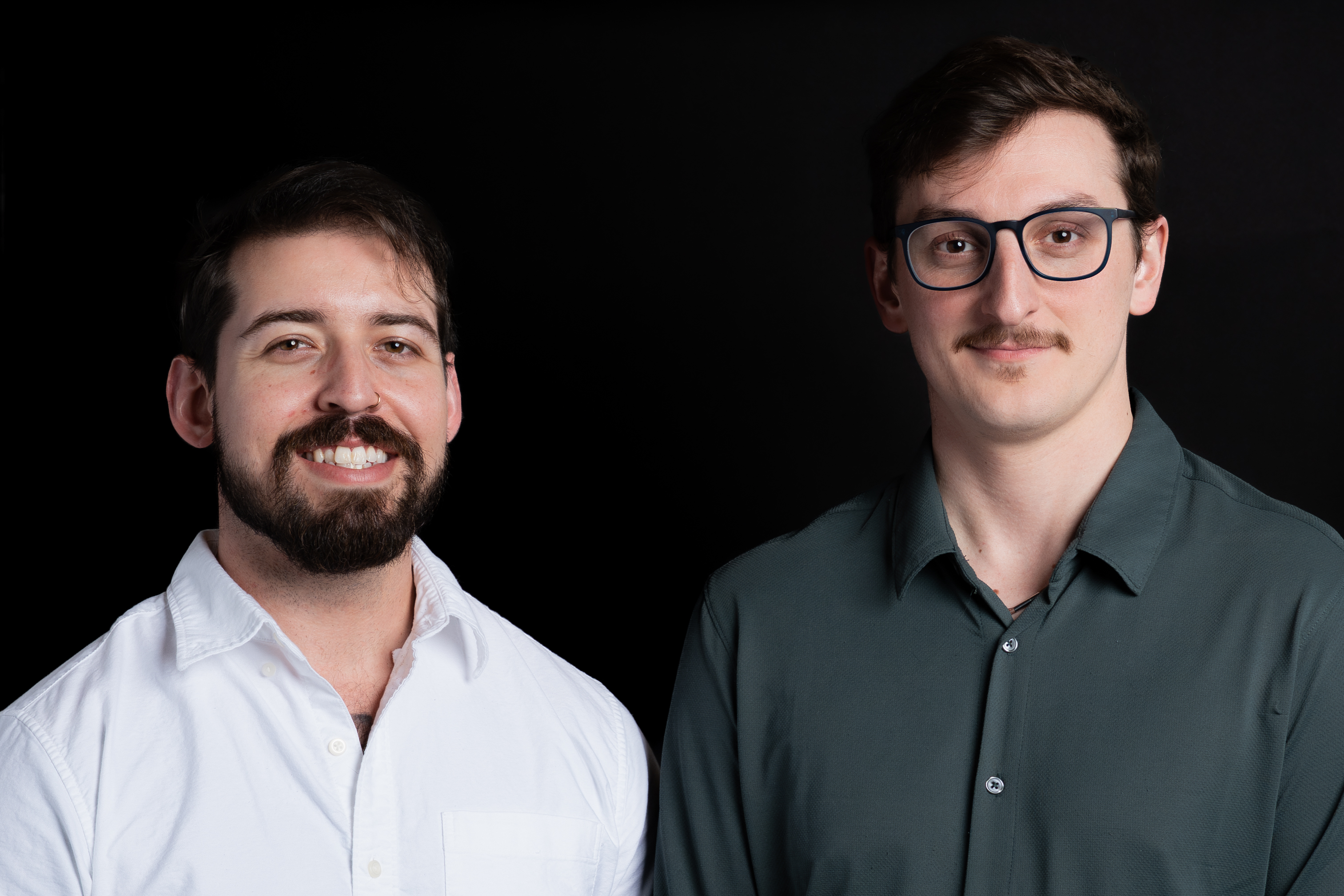
Sole 1 co-founders Bradley Wagman and Viktor Bokisch (Sam Mironko/Harvard Innovation Labs)
Sole 1 will also be competing in the Student Health Care & Life Sciences track. Co-founded by Master in Design Engineering student Bradley Wagman and fourth-year bioengineering concentrator Viktor Bokisch, the company is developing robotic socks that use artificial intelligence to adjust for mobility decreases due to injury, disability or age.
“It started from personal experience seeing how much mobility loss impacted people close to us,” Wagman said. “Over time, we noticed a pattern: most people were moving through the same progression of solutions, from braces to walkers to wheelchairs, without meaningful innovation or improvement in quality of life. After speaking with over 100 patients with foot drop and medical professionals, we consistently heard the same thing: existing options like braces and electrical stimulation are uncomfortable, stigmatizing, and not built for daily life. That led us to build a solution that prioritizes comfort, dignity, and real-world use alongside physical safety.”
The co-founders have already validated a functional model and are raising their first round of funding to coordinate with manufacturers and clinical partners for pilot testing.
“SEAS has enabled us to approach this as both an engineering and systems problem,” Wagman said. “It gave us the ability to integrate hardware, software, and human-centered design into a solution that can actually function in real-world clinical and daily environments. We also actually met in a robotics class, and SEAS will always be the place where Sole 1 was born.”

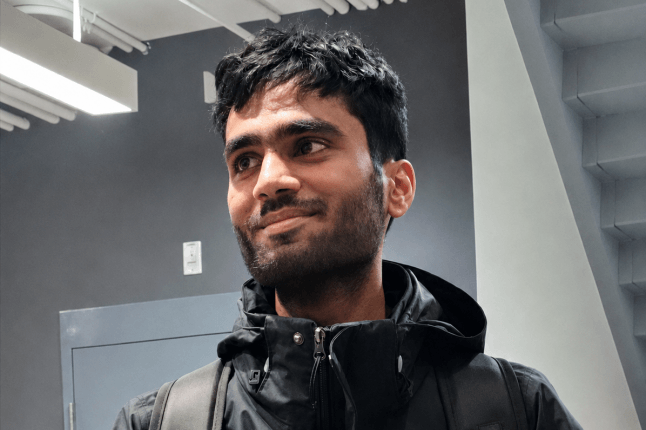
Refine Technologies co-founder Yann Calvó López (Sam Mironko/Harvard Innovation Labs)
Refine Technologies, co-founded by computational science and engineering master’s student Yann Calvó López, is competing in the Student Open track. Refine offers an AI-powered peer review for research papers that can greatly reduce the time needed for an often extremely arduous task.
The company launched publicly in late 2025 and is now used by researchers around the world.
“I spent two years working as a research assistant,” López said. “Part of that work involved going through every proof in papers we were reviewing, line by line, trying to find errors that could undermine the entire argument. I realized two things: first, that this kind of obsessive verification is exactly what the peer review process needs but rarely gets; and second, that it doesn't scale when it depends entirely on individual goodwill and expertise. Refine exists to systematize that obsession – to package the kind of thorough, rigorous checking and make it available at scale for any workflow where preventable errors can have serious consequences.”
SEAS continues to be a mainstay of the President’s Innovation Challenge. Start-ups by SEAS students or alumni have taken home at least one $75,000 grand prize each of the last three years.
Topics: Academics, AI / Machine Learning, Computational Science & Engineering, Entrepreneurship, Health / Medicine, Master of Design Engineering, MS/MBA, Robotics, Technology, Wearable Devices
Cutting-edge science delivered direct to your inbox.
Join the Harvard SEAS mailing list.
Press Contact
Matt Goisman | mgoisman@g.harvard.edu