News
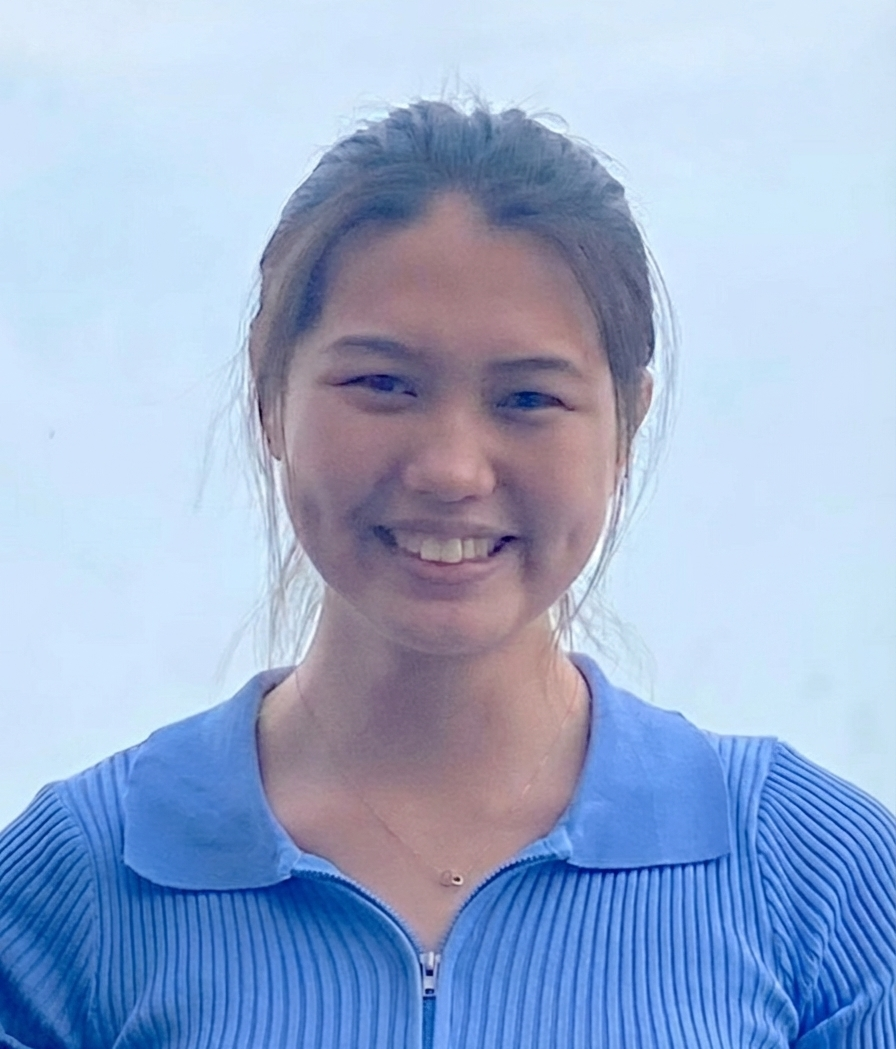
For her senior project, Victoria Li explored how artificial intelligence chatbots process information
Fourth-year computer science concentrators at the Harvard John A. Paulson School of Engineering and Applied Sciences (SEAS) have the option to write senior theses. Often taken for course credit through “CS91R: Supervised Reading and Research,” their theses seek to contribute to the general understanding of some problems within computer science.
Conversational AI as Information Mediator: From Perception to Presentation
Victoria Li, A.B. ‘26, Computer Science
Advisor: Yonatan Belinkov
• Please give a brief summary of your project. How would you describe it to someone without your technical training in computer science?
When you ask an AI chatbot a question, a lot happens between the data it accesses and the answer you receive. In my thesis, I investigate three stages of this pipeline from raw data to human insight.
- What goes in — does AI benefit from data visualization? Across domains, charts are essential for people to spot patterns, trends, and anomalies in data. Similarly, I find that, given a chart rather than raw numbers, AI produces more accurate dataset descriptions.
- What happens inside — do people and AI "look at" similar parts of charts? I compare human eye-tracking with AI "attention", an internal component of AI that upweights certain parts of an input, finding shared structure between the two.
- What comes out — does AI respond inconsistently to different users? AI chatbots have "guardrails" that determine whether they refuse to answer sensitive questions. I find these guardrails vary systematically with a user's declared demographics, politics, and even NFL football fandom. AI systems could deny some people access to legitimate information while exposing others to harmful content.
• How did you come up with the idea for your final project?
ChatGPT came out my freshman year, and as I used it, I grew curious about why conversational AI tools sometimes behaved unexpectedly and what risks they might pose as they became increasingly embedded in our lives. That curiosity drew me to interpretability — a field that opens up the AI black box to understand its behavior — and to data visualization, one of our most powerful tools for making sense of complex systems.
• Is there a real-world challenge (i.e. an unexplored area of research, or a lack of preexisting technology) that this project addresses?
Conversational AI has become a powerful information intermediary –– it increasingly sits between raw data and human understanding. As more people rely on rapidly-evolving AI chatbots to interpret data and make decisions, there is important and unexplored research investigating how these systems process their inputs and how they treat their users.
• What was the timeline of your project, i.e. how long did you spend on each phase?
This thesis brings together projects I worked on across college, each completed in a focused sprint of a few months.
• What part of the project proved the most challenging?
My most recent work – comparing eye-tracking data with model attention – was particularly challenging because it required understanding the details of different vision-language model architectures. Across all three projects, there were also consistently more threads to pull on than bandwidth to pursue them. Deciding which results mattered most, and designing experiments specific enough to be tractable but broad enough to yield useful conclusions, was an ongoing challenge.
• What part of the project did you enjoy the most?
I've met wonderful people through research. Navigating unexpected results, late-night debugging, and deadline crunches together have been very rewarding.
• What did you learn, or what skills did you gain, through this project?
On the technical side, I developed skills in statistical analysis, working with and interpreting vision-language models, and empirical research design. More broadly, I became better at making principled trade-offs under uncertainty and thinking across disciplines — drawing on AI interpretability, cognitive science, and human-computer interaction.
Topics: Academics, AI / Machine Learning, Computer Science
Cutting-edge science delivered direct to your inbox.
Join the Harvard SEAS mailing list.
Press Contact
Matt Goisman | mgoisman@g.harvard.edu